
Your golf cart batteries are tired. The cart slows on hills, the range keeps shrinking, and you are tired of checking water levels. A friend swears by lithium. Another says lithium is a fire risk and a waste of money. So which should you buy?
This guide compares lithium vs lead acid golf cart batteries in plain language. You will see the pros and cons of each, a price and total-cost comparison, an honest answer to “are lithium golf cart batteries a fire hazard?”, details on 36V lithium golf cart batteries, and a simple way to decide whether to choose lithium or lead acid for your golf cart.
Quick Answer: Lithium or Lead Acid for a Golf Cart?
Lithium (LiFePO4) batteries cost more upfront but usually last much longer, weigh less, charge faster, and need almost no maintenance. Lead-acid batteries (flooded or AGM) cost less upfront but need more care and usually need replacing sooner. If you ride often and plan to keep the cart for years, lithium tends to win over time. If you use the cart a few times a year and want the lowest price today, lead-acid can still make sense.
| Feature | Flooded Lead-Acid | AGM Lead-Acid | Lithium (LiFePO4) |
|---|---|---|---|
| Upfront cost | Lowest | Medium | Highest |
| Typical lifespan | About 3 to 5 years | About 4 to 7 years | About 8 to 10+ years |
| Charge cycles | About 500 to 700 | About 700 to 1,000 | About 2,000 to 5,000 or more |
| Weight | Heavy | Heavy | Roughly 50 to 60 percent lighter |
| Maintenance | Regular watering and cleaning | Very low | Very low |
| Charge time | About 8 to 12 hours | About 6 to 8 hours | Often about 2 to 5 hours |
| Voltage under load | Drops as it drains | Drops as it drains | Stays steadier |
A note on sources: most published comparisons come from battery sellers, and many sell lithium, so their numbers tend to favor lithium. Trojan, which makes both lead-acid and lithium batteries, also reports longer life for lithium. Treat all figures as typical ranges and compare warranties and specifications before you buy.
The Three Main Golf Cart Battery Types
Flooded Lead-Acid
This is the traditional golf cart battery. It uses lead plates in liquid acid and needs regular water top-ups and terminal cleaning. It is the cheapest to buy, which is why many carts still use it.
AGM Lead-Acid
AGM stands for absorbed glass mat. The battery is sealed, so you do not add water. It costs more than flooded batteries, charges a little faster, and does not spill, but it is still heavy and has the shorter cycle life of lead-acid chemistry.
Lithium Iron Phosphate (LiFePO4)
LiFePO4 is the lithium chemistry used in most modern golf cart batteries. It has a built-in battery management system (BMS) that protects the cells. It is light, long-lasting, and nearly maintenance-free, but it costs the most upfront.
Lithium vs Lead Acid Golf Cart Batteries: Pros and Cons
Lithium Pros
- Longer life. Many lithium packs are rated for 2,000 to 5,000 cycles, compared with about 500 to 1,000 for lead-acid, and brands such as Trojan say lithium can last up to about 10 years.
- Much lighter. A lighter cart accelerates and climbs better and is easier on tires and suspension.
- Faster charging. Often a few hours instead of an overnight charge.
- Nearly maintenance-free. No watering, no acid, and little terminal corrosion.
- Steady power. Voltage stays flatter as the battery drains, so the cart does not feel as sluggish near the end of the charge.
- More usable capacity. You can use more of the stored energy without hurting the battery.
- Low self-discharge. Lithium holds its charge better in storage.
- Often longer warranties.
Lithium Cons
- Higher upfront price. Often two to three times the cost of lead-acid.
- May need a new charger. Lithium needs a charger with the right profile.
- Cold-weather charging limits. Many lithium packs should not be charged below freezing unless they have a built-in heater, so check the specifications.
- Quality varies. Cheap, uncertified packs can have weak BMS protection.
- Compatibility checks. The cart’s controller, meter, and charger port may need attention in some conversions.
- Repair is not DIY. If a cell fails, you usually replace the pack or send it to the maker.
Lead-Acid Pros
- Lower upfront cost. Easier on the budget today.
- Familiar technology. Any golf cart shop can test and replace it.
- Works with the existing charger. Most carts already have a lead-acid charger.
- Better in extreme cold. Lead-acid tolerates sub-freezing weather better, although its capacity still drops in the cold.
- Widely recycled. Lead-acid recycling is well established.
Lead-Acid Cons
- Shorter lifespan. Many sets need replacement in three to five years.
- Heavy. The pack can weigh hundreds of pounds.
- Maintenance. Flooded batteries need regular watering and cleaning. See the golf cart battery watering guide.
- Slow charging. Often 8 to 12 hours.
- Voltage sag. The cart slows as the charge drops.
- Acid and gas hazards. Lead-acid batteries can leak acid and give off hydrogen gas during charging.
Lithium vs Lead Acid Golf Cart Batteries: Price
Price is the main reason people hesitate. Published ranges vary by region, brand, and capacity, but here is a typical picture for a 48V system:
| Battery Type | Typical 48V Battery Cost | Notes |
|---|---|---|
| Flooded lead-acid | About $800 to $1,500 | Lowest cost, highest maintenance |
| AGM lead-acid | About $1,500 to $2,500 | Sealed, moderate cost |
| Lithium (LiFePO4) | About $1,000 to $3,000 or more for the battery alone, and often about $2,500 to $4,500 for premium packs | Highest upfront cost |
| Full lithium conversion | About $1,500 to $4,000 or more in total | Includes battery, and sometimes charger and installation |
These ranges combine several guides, some priced in euros and converted roughly, so use them only as a starting point. Prices also depend on whether you need a new charger, mounting hardware, a display, or professional installation. For a closer look at replacement costs, read how much it costs to replace golf cart batteries.
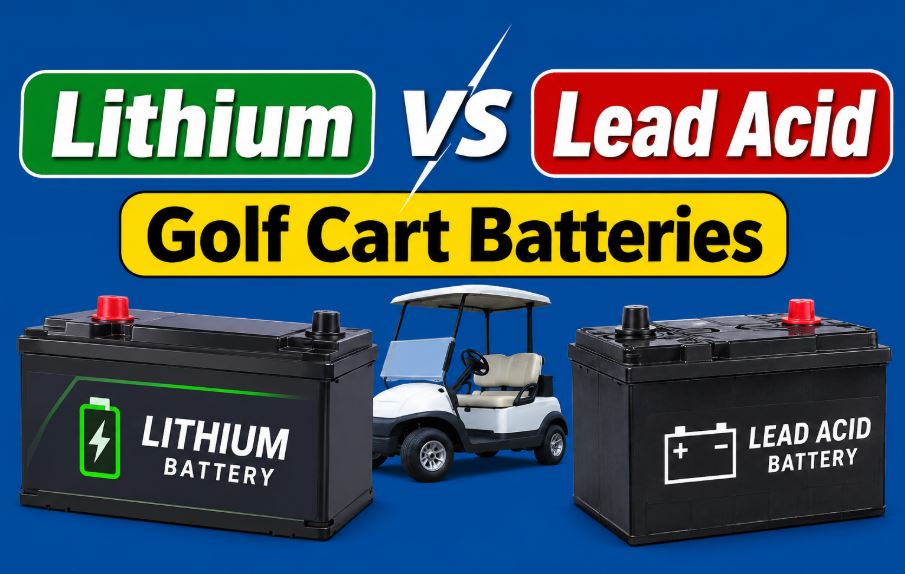
Total Cost of Ownership: A Simple Example
The sticker price is only part of the story. Here is a simplified, illustrative 10-year example. The numbers are assumptions, not quotes:
| Cost Item | Lead-Acid (Assumed) | Lithium (Assumed) |
|---|---|---|
| First battery set | $1,200 | $2,500 |
| Replacements in 10 years | Two more sets at $1,200 each, or $2,400 | None |
| Maintenance and water | About $500 | Close to $0 |
| Charger upgrade | None | $0 to $500 |
| Rough 10-year total | About $4,100 | About $2,500 to $3,000 |
In this example, lithium saves money over ten years, but only if the cart is used often enough to wear out lead-acid batteries. If you only ride a few times a year, a cheap lead-acid set may not wear out for a long time, and the savings shrink. The formula to keep in mind is simple: total cost equals purchase price plus energy, maintenance, and replacement costs, minus resale value.
Are Lithium Golf Cart Batteries a Fire Hazard?
This is a fair question, and the honest answer is: the risk is low for quality LiFePO4 batteries, but it is not zero, and it depends heavily on the chemistry, the build quality, and how you charge and store the battery.
Why Lithium Batteries Can Catch Fire
The main danger is thermal runaway. This happens when a lithium cell overheats, is damaged, or has an internal fault, and begins heating itself in an uncontrollable way. It can release smoke, gas, and flames. Lithium fires burn hot, can be hard to put out, and may reignite after the first fire seems to be out. Industry reports also note that lithium-ion batteries in general have been linked to thousands of fires in recent years, although those figures cover many products, not only golf carts.
Why LiFePO4 Is Safer Than Other Lithium Types
- Higher thermal runaway threshold. Battery makers say LiFePO4 cells begin thermal runaway at roughly 270 degrees Celsius, compared with roughly 150 to 210 degrees for NMC and NCA chemistries found in some lower-cost lithium-ion packs.
- Stable chemistry. Iron phosphate is less prone to overheating than cobalt-based chemistries. Trojan describes LiFePO4 as one of the most stable lithium chemistries available.
- A built-in BMS. The battery management system monitors voltage, current, and temperature, and shuts the pack down if something goes wrong.
- Safety standards. UL 2271 is a safety standard for batteries in light electric vehicles. It covers things like vibration, abnormal charging, high loads, and short circuits.
Remember that these numbers come from battery makers. You can read Trojan’s own explanation of why some lithium batteries catch fire and how to prevent it.
What About Lead-Acid Fire and Safety Risks?
Lead-acid batteries have their own hazards. They can leak acid, corrode cables and the cart frame, and release hydrogen gas while charging, which can ignite if sparks occur in a poorly ventilated space. Overcharging and shorted cables can also cause overheating. So neither type is risk-free. Lithium’s risk is rarer but can be more intense when it happens.
How to Lower the Fire Risk of a Lithium Golf Cart Battery
- Choose LiFePO4. Avoid unknown chemistries from unknown sellers.
- Look for UL 2271 certification. Ask for the exact model’s certificate, not just a marketing claim.
- Buy from a trusted brand with a real warranty. Very cheap packs may skimp on protection.
- Use the charger made for your battery. A wrong charger is a common cause of problems. See how to charge an electric golf cart.
- Charge in a ventilated, dry place. Keep flammable items away.
- Do not charge a damaged battery. Cracks, swelling, burning smells, or heat are warning signs. Stop and call the manufacturer.
- Protect the pack from impacts and water. Secure it properly in the tray.
- Install a smoke alarm in the charging area.
- Know what to do in a fire. Call the fire department. Do not try to fight a large lithium fire yourself.
- Inspect cables and connections regularly.
Lithium Golf Cart Batteries 36V
Many older carts, such as classic Club Car, EZGO, and early Yamaha models, run on 36 volts. Lithium packs are available for these carts too, usually as a drop-in replacement for the six 6V batteries or three 12V batteries.
| Item | 36V Lithium (LiFePO4) Pack |
|---|---|
| Cells | Usually 12 cells in series |
| Nominal voltage | About 38.4V |
| Fully charged and rested | About 41 to 43.8V, depending on the design |
| Replaces | Six 6V or three 12V lead-acid batteries |
| Charger | A 36V lithium-compatible charger |
- Check the cart’s voltage first. Count the batteries and read the labels. See how many batteries are in a golf cart and the golf cart battery voltage chart.
- Buy a pack made for 36V. Do not put a 48V pack in a 36V system.
- Confirm the charger. You usually need a lithium-compatible 36V charger, and some kits include one.
- Check size and fit. A lithium pack is usually smaller than the lead-acid set, so you may need a spacer or tray kit.
- Expect a price near, or a bit below, 48V packs. Smaller capacity often means a slightly lower price, though brands vary.
- Look at the controller. Speed controllers and meters may need compatibility checks. See how a golf cart speed controller works.
For a general comparison of how pack voltage affects speed, see how fast a golf cart goes.
Lithium or Lead Acid Battery for Golf Cart: How to Decide
| Your Situation | Best Fit |
|---|---|
| Use the cart a few times a year and want the lowest price | Flooded lead-acid |
| Want a sealed battery without the cost of lithium | AGM lead-acid |
| Ride several times a week or live in a community that uses carts daily | Lithium |
| Climb hills or carry heavy loads | Lithium, for steady power |
| Hate watering batteries | Lithium or AGM |
| Run a fleet or rental carts | Lithium, for uptime and lower long-term cost |
| Store the cart in a very cold place and charge it there | Lead-acid, or lithium with a built-in heater |
| Plan to sell the cart soon | Lead-acid may cost less now, although lithium can add resale appeal |
| Want the longest warranty and the most range | Lithium |
Questions to Ask Yourself
- How often do I use the cart?
- How long will I keep it?
- What is my budget today, and my budget over ten years?
- Do I want to do regular maintenance?
- Will I charge it in freezing conditions?
- Is my charger compatible, or will I need a new one?
- Does the lithium pack I am considering have UL 2271 certification and a solid warranty?
Switching From Lead-Acid to Lithium: What to Know
- Do not mix chemistries. Never combine lead-acid and lithium batteries in the same pack.
- Replace the whole pack. A partial swap will not work.
- Check the charger. Some lithium kits include a charger, and some work with your old one only if the maker says so.
- Check the meter. A voltage-based dash meter may read strangely with lithium, since the voltage curve is flatter.
- Plan the installation. Many kits are drop-in, but you may need brackets or cables. See how to remove golf cart batteries and how to change golf cart batteries.
- Dispose of the old batteries properly. Take lead-acid batteries to a recycler or a store that accepts them.
- Keep the paperwork. Warranty and certification documents matter if there is a problem.
Before you decide, test what you have. A weak battery may be the only problem. See how to test a golf cart battery with a multimeter, how to tell which golf cart battery is bad, and how long a golf cart battery lasts. If you are keeping lead-acid for now, follow how to maintain a golf cart battery for a long lifespan.
Range, Speed, and Performance
- Range. Lithium packs often deliver more usable range from the same nominal capacity because you can use more of the stored energy, and the lighter weight helps efficiency.
- Hill climbing. Lead-acid voltage drops under load, so carts can feel weaker on hills near the end of a charge. Lithium voltage stays more stable.
- Speed. Top speed is set mostly by the motor and controller, not the battery type, but a healthy lithium pack keeps performance consistent.
- Hot weather. Both types lose life in extreme heat. Keep the cart in shade when you can.
- Cold weather. Both types lose range in the cold, and lithium needs care with charging below freezing.
If you walk and ride on the course, note that a lighter cart can also be gentler on turf. See what cart path only means in golf and the 90 degree rule in golf.
Charging Differences
| Feature | Lead-Acid | Lithium |
|---|---|---|
| Charge time from low | About 8 to 12 hours (AGM often 6 to 8) | Often about 2 to 5 hours |
| Charger type | Lead-acid profile | Lithium profile |
| Topping off | Needs a full charge regularly to avoid damage | Partial charges are fine |
| Watering | Flooded batteries need distilled water | None |
| Ventilation | Important, because of hydrogen gas | Still important for any charger |
For charging basics, read how long it takes to charge a golf cart. If you want a full set of readings, see the golf cart battery voltage chart. A small 12V charger is not right for a full pack. See how to charge golf cart batteries with a 12V charger. If something seems wrong with the charger, see how to test a golf cart battery charger and why your golf cart charger is not working. Do not use car batteries in a cart either. See can you use car batteries in a golf cart.
Environmental and Resale Considerations
- Recycling. Lead-acid batteries are widely recycled. Lithium recycling is growing but less established, so ask the manufacturer about take-back programs.
- Fewer replacements. A lithium pack that lasts ten years means fewer batteries to dispose of.
- Energy use. Lithium is generally more efficient, so it wastes less energy as heat during charging.
- Resale value. A cart with a fresh lithium pack and paperwork can be more attractive to buyers, though the pack’s age and brand matter.
Common Mistakes When Choosing Golf Cart Batteries
- Buying the cheapest lithium pack without checking certification or warranty.
- Mixing old lead-acid and new lithium batteries.
- Forgetting the charger.
- Choosing a pack of the wrong voltage.
- Ignoring cold-weather charging rules.
- Replacing the whole pack when only one battery is bad.
- Judging only by upfront price.
- Charging in an enclosed, unventilated space.
Frequently Asked Questions
Are lithium golf cart batteries better than lead acid?
For frequent users, usually yes. Lithium lasts longer, weighs less, charges faster, and needs less maintenance, though it costs more upfront.
Are lithium golf cart batteries a fire hazard?
The risk is low for quality LiFePO4 packs with a BMS and UL 2271 certification, but it is not zero. Fires can be intense when they happen, so choose certified batteries, use the right charger, and avoid damaged packs.
Which is cheaper, lithium or lead acid golf cart batteries?
Lead-acid is cheaper to buy. Lithium often costs less over ten years if the cart is used often, because it needs fewer replacements and less maintenance.
How much do lithium golf cart batteries cost?
A 48V lithium battery typically costs about $1,000 to $3,000 or more, and a full conversion can run about $1,500 to $4,000 or more, depending on brand and extras.
How long do lithium golf cart batteries last?
Many are rated for 8 to 10 years or more and 2,000 to 5,000 cycles, compared with about 3 to 5 years for flooded lead-acid.
Can I put lithium batteries in my 36V golf cart?
Yes. There are 36V lithium packs made for older carts, but check the fit, controller, and charger first.
What is the voltage of a 36V lithium golf cart battery?
The nominal voltage is about 38.4 volts, and it reads roughly 41 to 43.8 volts when fully charged, depending on the design.
Do I need a special charger for lithium?
Usually yes. Lithium packs need a charger with the right profile, and many conversion kits include one.
Can I mix lithium and lead acid batteries?
No. Always use one battery type in a cart.
Do lithium golf cart batteries work in the cold?
They work, but most should not be charged below freezing unless they have a built-in heater. Check the maker’s specifications.
Are lithium batteries lighter than lead acid?
Yes, often by 50 to 60 percent, which helps acceleration, range, and tire wear.
How long does it take to charge lithium vs lead acid?
Lead-acid often takes about 8 to 12 hours, while lithium often takes about 2 to 5 hours.
What does UL 2271 mean?
It is a safety standard for batteries used in light electric vehicles, including golf carts. It covers vibration, abnormal charging, high loads, and short circuits. Ask sellers for proof for the exact model.
Is it worth converting an old golf cart to lithium?
It can be, if the cart is in good shape and you ride often. If the cart needs major repairs or you rarely use it, a fresh lead-acid set may be the better choice.
Should I replace just one bad battery?
With lead-acid, a single new battery can work if the others are healthy and fairly new, but mixing ages often shortens life. With lithium, you replace the full pack.
Final Thoughts
The choice between lithium and lead acid golf cart batteries comes down to how you use your cart. Lithium costs more up front but offers longer life, lighter weight, faster charging, steadier power, and almost no maintenance. Lead-acid costs less today but needs more care and replacement sooner. Fire risk is low with a quality, certified LiFePO4 pack, but it deserves respect, so buy from a reputable maker and use the right charger.
Check your voltage, test your current batteries, compare real prices and warranties, and think in terms of ten-year cost. For more golf cart guides, read the average length of a golf cart, and for more on the game, explore how many steps are in 18 holes of golf and what a shotgun start in golf is. And for another look at lithium cost and value, Trojan explains whether lithium batteries are worth the money.